Now enrolling: Gobi March 2027
Get to the start line strong and the finish line standing
Group coaching for the Gobi March 2027. You get your own training plan, reviewed and updated every week, and you prepare alongside a small group of athletes heading to the same start line. $150 per month.
Coached by Jeremy Inabnit, a full-time stage race coach who finished 2nd at the Atacama Crossing and is a listed trainer on the Racing the Planet website.
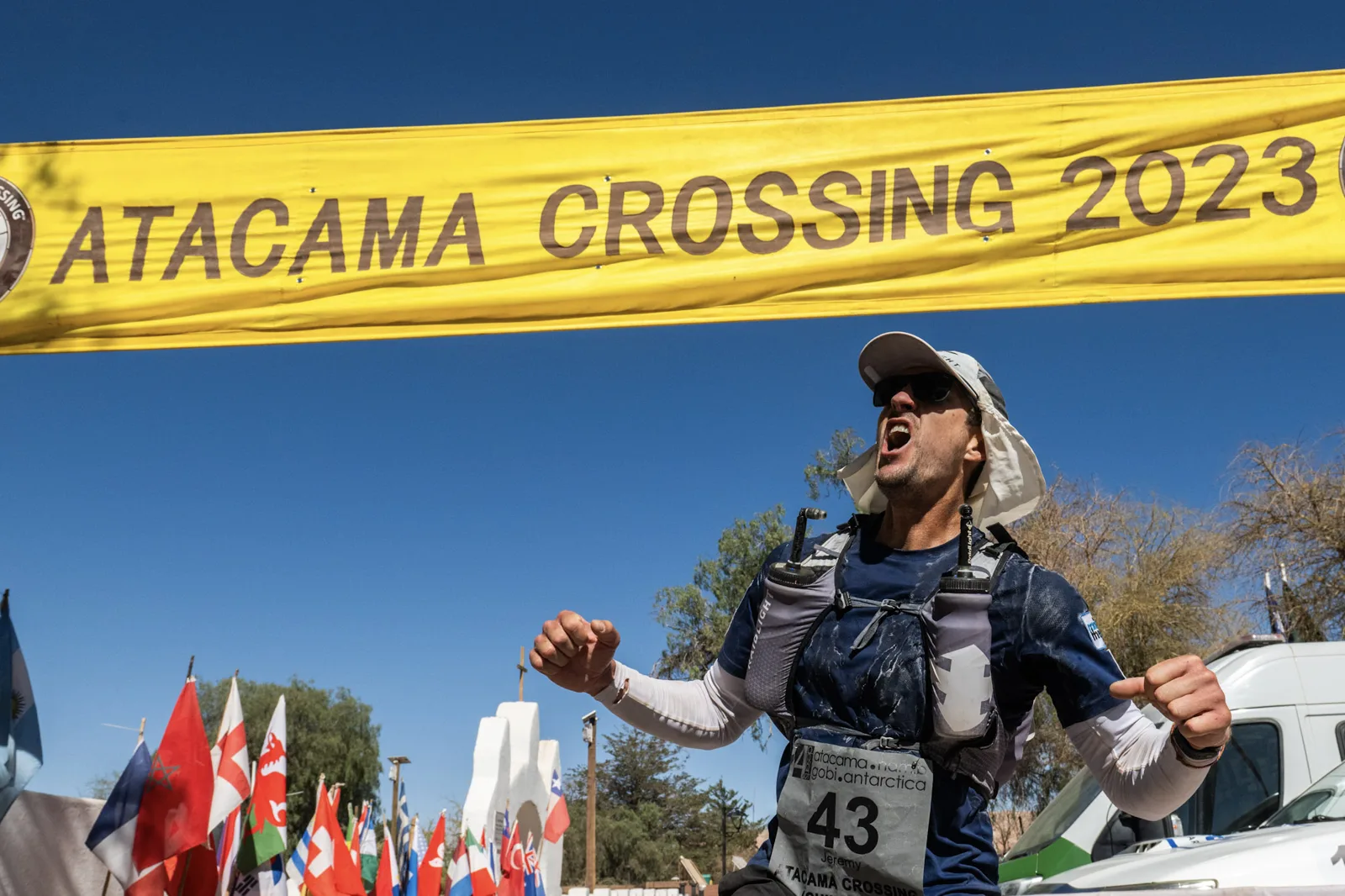
Gobi March 2027 group · 250 km self-supported and UltraLite
You've signed up for a stage race. Now the questions start.
These are the questions I hear most from athletes preparing for their first stage race:
- When do I start running with a pack, and how heavy should it get?
- How do I train for climbs when there are no hills where I live?
- How do I prepare for heat when I'll be training through winter and spring?
- How much food do I carry, and how do I actually eat and drink in a desert?
- Do I have enough time to be ready?
- How will my body feel on day 2, day 3, day 4?
Each one has a good answer, and most of them have a right time in your season. Fueling practice starts with your first long run. Pack weight builds over months. Other things only need your attention closer to race day.
The information is easy to find. Working out which parts of it apply to you, and in what order, is the slow part. Plenty of people prepare for a stage race on their own. The group is for people who would rather spend their limited hours training than sorting through advice.
Done a stage race before? Then you already know which day was hardest, and why. Your plan starts from there.
How your season comes together
Coaching starts on February 1, about 20 weeks before the race.
Your plan is written for you, so no two athletes in the group train the same weeks. The logic underneath is shared: build what takes longest to adapt from the start, practice what needs practice early and often, and deal with each practical detail at the point in your season when it matters. Here's how that answers the questions above.
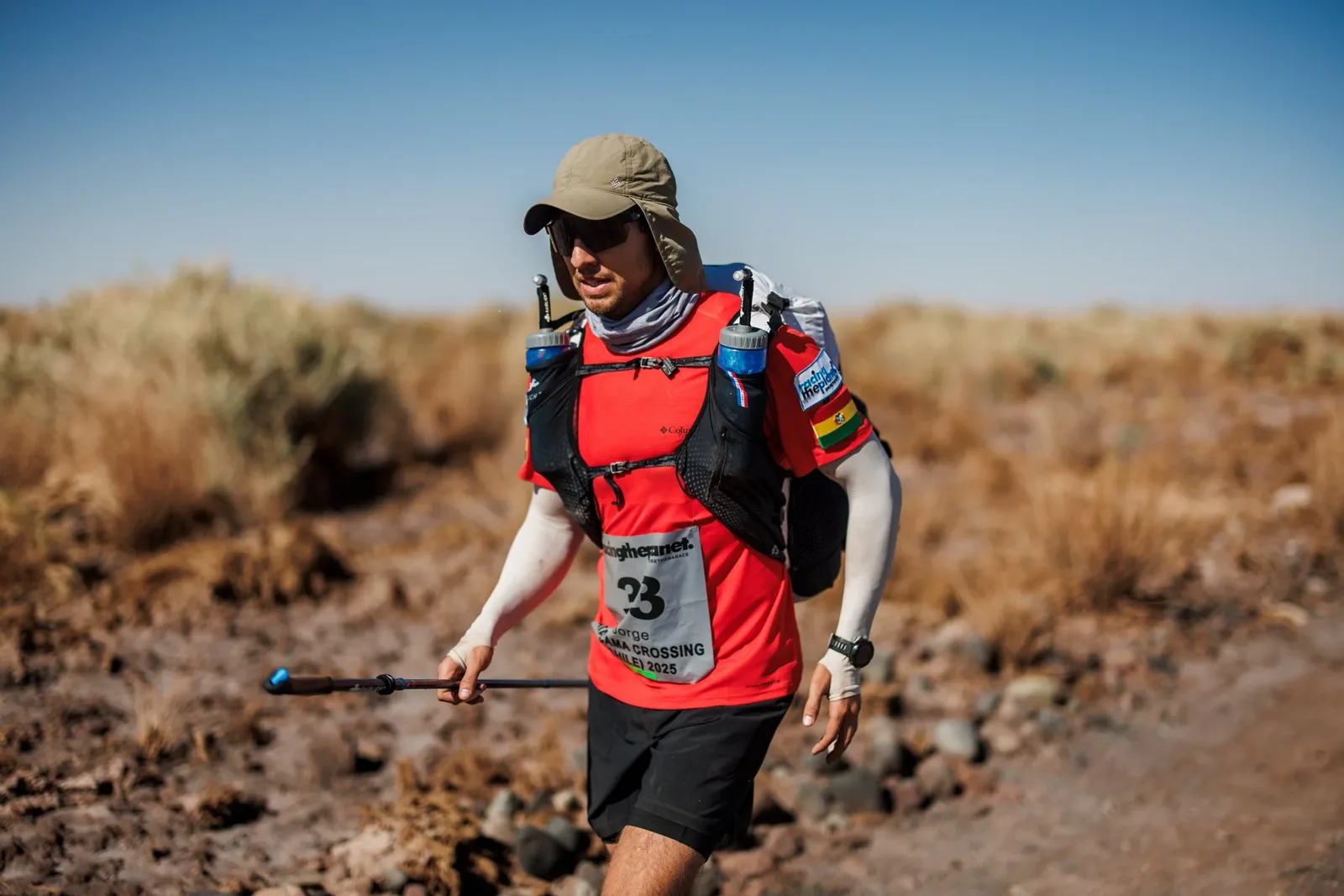
Running with a pack
You'll run with a light pack on your long runs from early in the season, and the weight builds gradually, so your shoulders, back, feet and legs adapt along with your fitness. How heavy it ends up depends on your kit and your food, which we work out together.
Hills when you don't have any
A treadmill on an incline covers most of the climbing. Downhills are harder to replace, so your plan includes trips to real hills every few weekends. Each trip makes the next one less damaging to your legs, which is why they're spread through the season instead of saved for the end.
Heat in winter and spring
You can prepare for heat in a cold climate. We'll plan it for the part of the season where it does the most good, using what you have access to, such as a sauna or a hot tub.
Food and fluid
Fueling practice starts with your first long run. Your gut adapts to eating and drinking on the move with practice, and that takes months. By race day you'll know what you're eating each hour and why, and the Stage Race Planner turns that into what goes in your pack.
Day 2, day 3, day 4
No plan can tell you exactly how your body will feel on day 4 before you get there, but training can narrow the gap. Back-to-back long days, steadily building volume and heavy strength work build the durability that makes your later stages look more like your first.
Enough time
Whether 20 weeks is enough depends on where you're starting from. It's one of the first things we'll talk about on the call after you apply. If you'd like more runway, you can start before February.
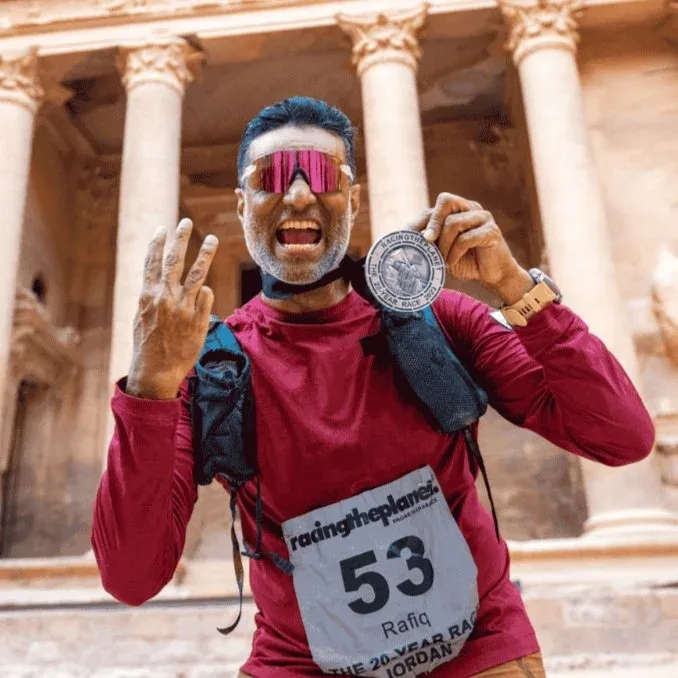
“My pace improved, recovery time shortened, and I’ve built endurance I never thought possible… I also carried more calories than previous races which means more weight on my backpack but I still managed to stay strong and recover fast for the next day's stage.”
What we cover, and roughly when
Training is the biggest part of your preparation, but it isn't all of it. The tutorials and group calls cover the rest of what the race asks of you, roughly in this order:
Fitting training around the hours you have, strength training, daily nutrition, starting fueling practice, and choosing gear and mandatory kit before you buy it.
Building pack weight, downhill and terrain training, heat preparation, foot care and blister prevention, sleeping kit and camp life, and mental strategies to practice in training.
Final packing and pack weight, pacing and strategy for each stage, logistics and travel, and the last weeks before the start.
Doing the UltraLite? Your main gear is carried between camps, so your plan spends less time on pack weight and more on what your race does ask of you.
Underneath all of it are four requirements: aerobic durability, musculoskeletal durability, fueling capacity and mental strength. Your plan trains all four at once, because each one supports the others. The full explanation: The Four Requirements for Self-Supported Stage Race Success
From athletes I've coached for the Gobi March
Three athletes I've coached have finished on a stage race podium, at the Gobi March and the Fire and Ice Ultra Stage Race.
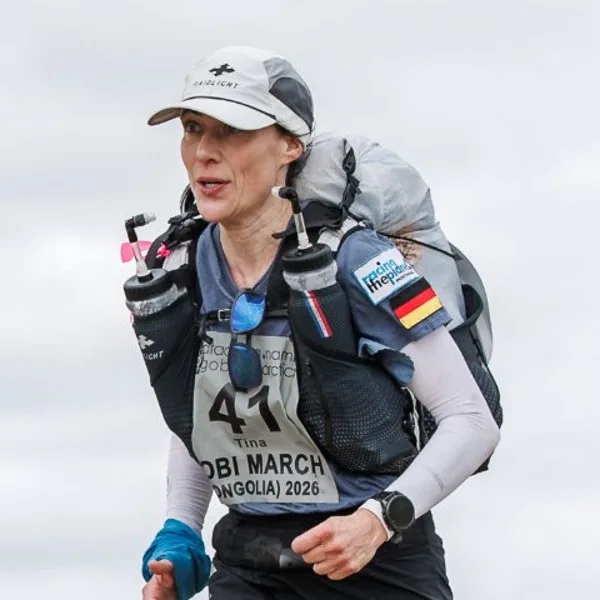
“Working with Jeremy helped me become a stronger and more complete athlete and gave me knowledge that will continue to shape the way I train and prepare for future challenges.”
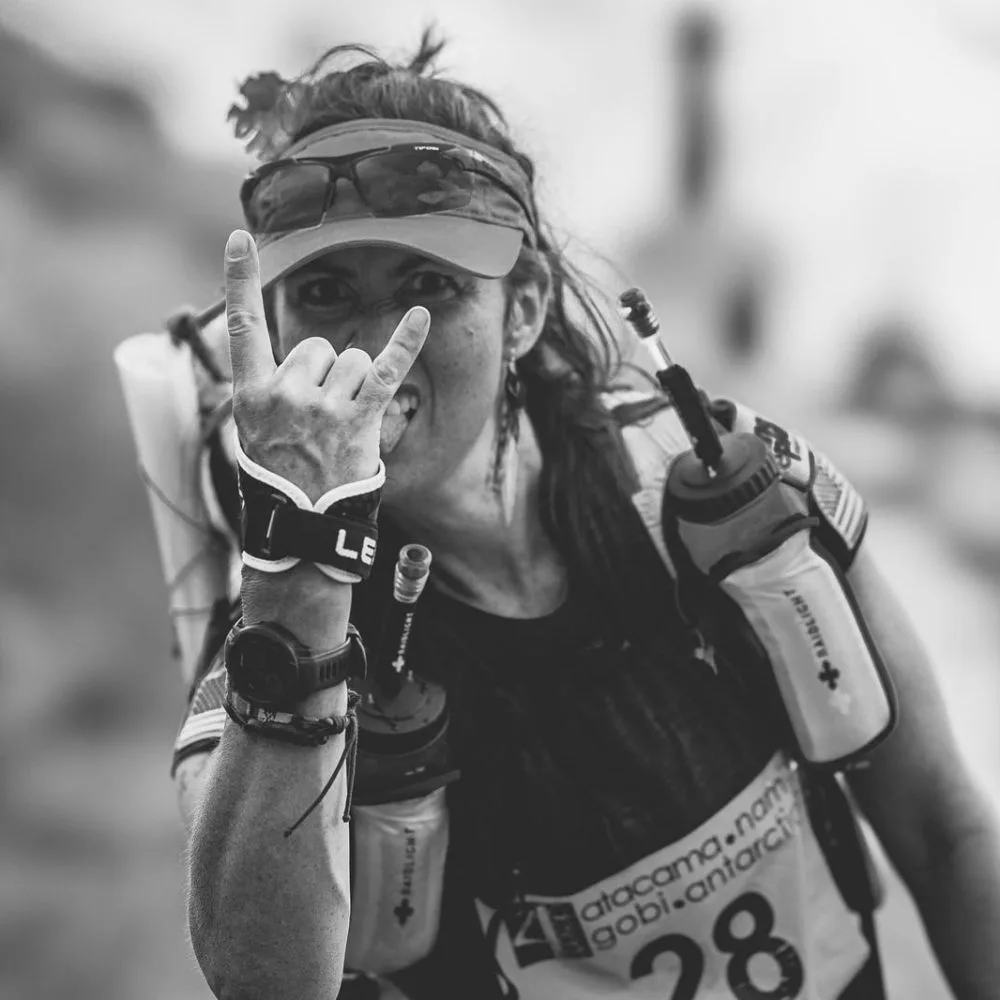
“I was bringing a lack of experience and a handful of injuries and health concerns to the table, which, quite honestly, made me apprehensive. In my mind, it is the elites and seasoned athletes who use coaches… More specifically, he has been critical in helping me better grasp things like fueling and hydration needs, and the importance of training specific to a particular event.”
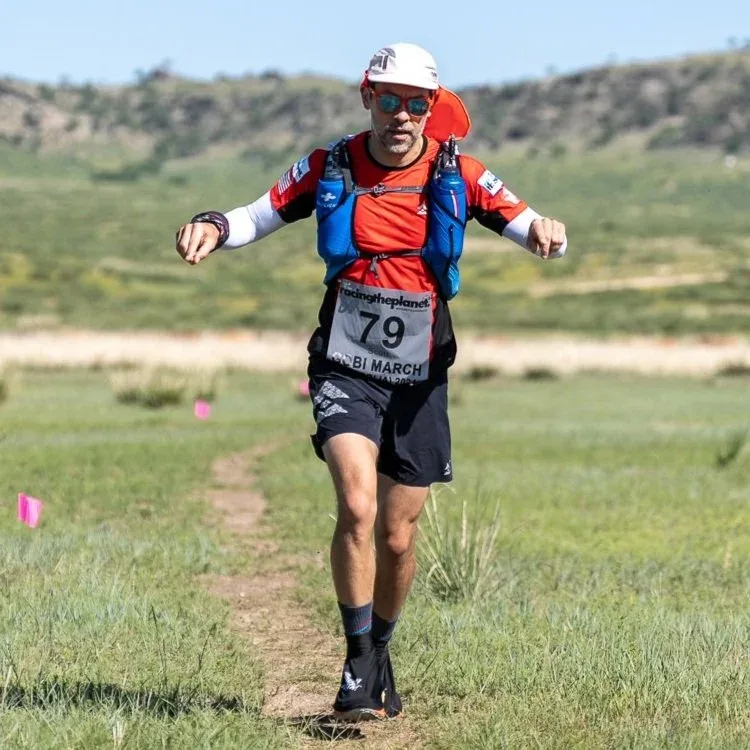
“His methodical approach and detail-oriented style resonated deeply with me, making every aspect of my training—from workouts to nutrition—feel tailored to my preferences… I’ve never felt more prepared for a competitive event, and I attribute this success to his exceptional coaching style and our inspiring conversations.”
How the group works
Your training plan is written for you and changes every week, the same as it would in 1:1 coaching. The difference is where the conversation happens. You get feedback on your workouts once a week, and questions are answered in the group chat and on monthly calls, where everyone gets the benefit of every answer. That shared time is why the group costs half as much as 1:1 coaching.
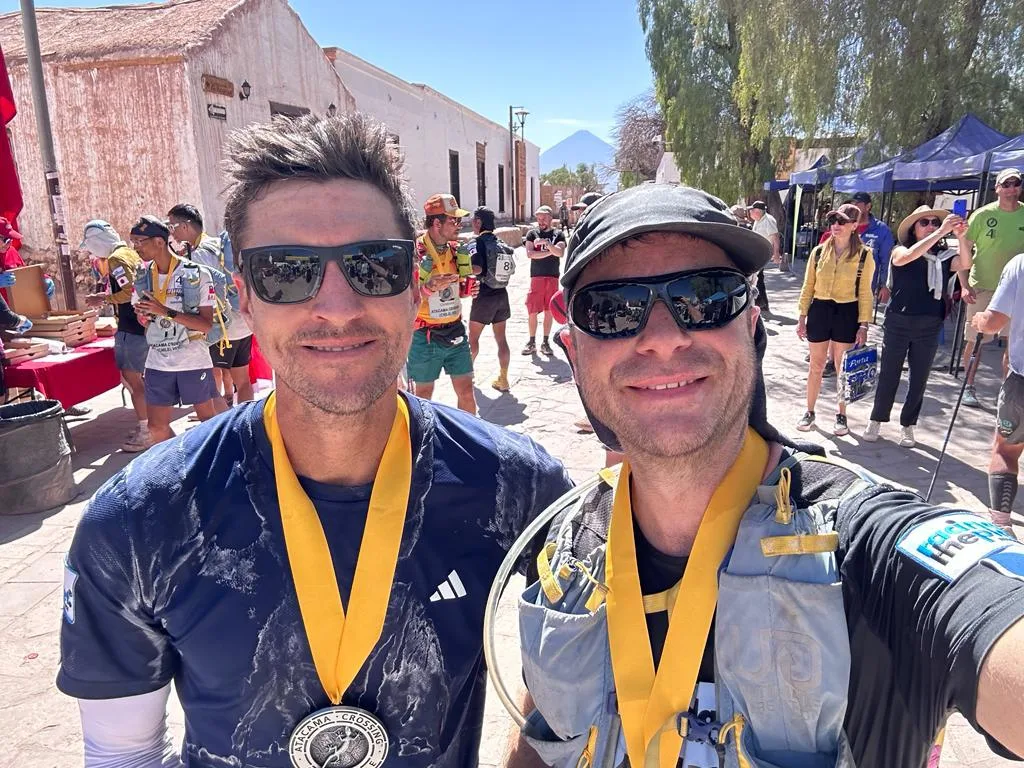
I review your past week, reply to your workout comments, and add the next week to your plan, adjusting what's ahead if something has changed. At any point, you can see the next 7 to 14 days of training.
You leave a short comment after each workout. I read them as they come in and step in right away if something looks off. If you're injured, ill or your schedule changes, message me and I'll adjust your plan.
A video review of your training block: how it went, what we're changing, and what the next block is for.
A group call on Zoom, mostly for your questions. Every call is recorded, so you can watch it later if you can't make it live.
Any time
- Your Annual Training Plan, which maps out the season so you can see what each block is for.
- A group chat for training questions and comparing notes with athletes preparing for the same race. Anything about an injury comes to me directly.
- Tutorials on the practical side of race prep, like how I pack for a stage race or what goes in a blister kit, to use whenever it suits you.
- The Stage Race Planner, the race planning app I built for working out your pacing, fueling and gear plan.
- TrainingPeaks Premium while you're in the group, so you can see your whole plan and move workouts when life gets in the way. If you already pay for Premium, keep your own.
I coach full time, and Monday is when I review the group's training and plan the weeks ahead.
Group or 1:1 coaching
Both are coaching, with a plan written for you. The difference is how much individual time I spend with you each week.
The group is a good fit if
- You're entered in the Gobi March 2027, in the 250 km self-supported race or the UltraLite, or close to signing up.
- You're already running at least three times a week and can make room for gradually more training.
- You're comfortable working from a plan with feedback once a week.
- You'd like to prepare alongside other people heading to the same race.
1:1 coaching is a better fit if
- You're managing an injury, or coming back from one, and need closer monitoring.
- You want daily feedback on your workouts and direct access to me during the week.
- You want your strength technique and running gait reviewed on video.
- You want to work through your race strategy one to one.
| Group | 1:1 coaching | |
|---|---|---|
| Personalized training plan | Running, strength and mobility | Running, strength and mobility |
| Starts | February 1, 2027, or earlier at the group rate | As soon as you sign up |
| Workout feedback | Weekly, on Mondays | Daily, within 24 hours (48 on weekends) |
| Video reviews | After each training block, every 3 to 4 weeks | Every week |
| Contact during the week | Message me about injury, illness or schedule changes | WhatsApp, any time |
| Calls | Monthly group call | 1:1 calls when you need them |
| Race preparation | Your plan, tutorials, video reviews, group calls and the Stage Race Planner | One to one, including race strategy sessions |
| Group chat | Yes | No |
| Strength and gait video analysis | No | Yes |
| Price | $150 per month | $300 per month |
Not sure which fits? Say so in your application and I'll tell you what I'd recommend.
About me
Before I became a coach, I traded life as a scuba diving instructor for a desk job as a junior software developer and a new life as a father in Finland. I wanted something hard to throw myself into. I found the Racing the Planet website and, with one trail marathon behind me, signed up for a 250 km self-supported race before I could talk myself out of it.
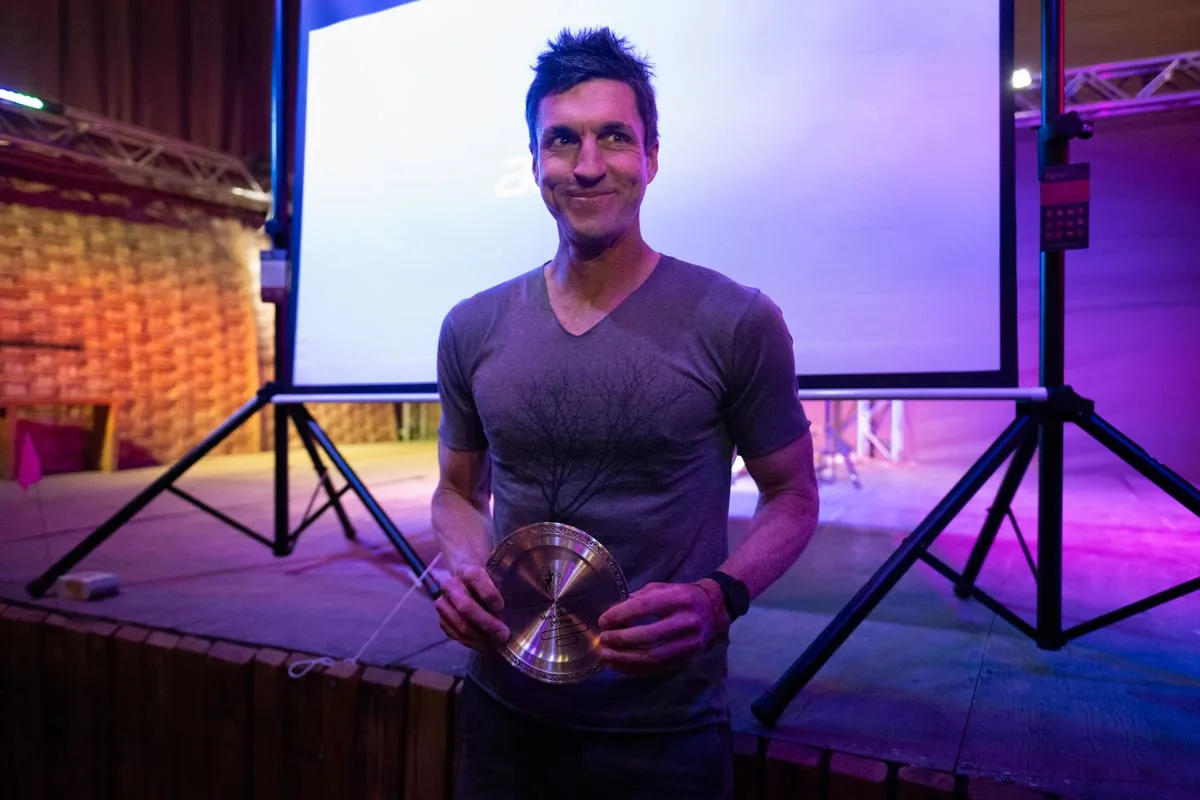
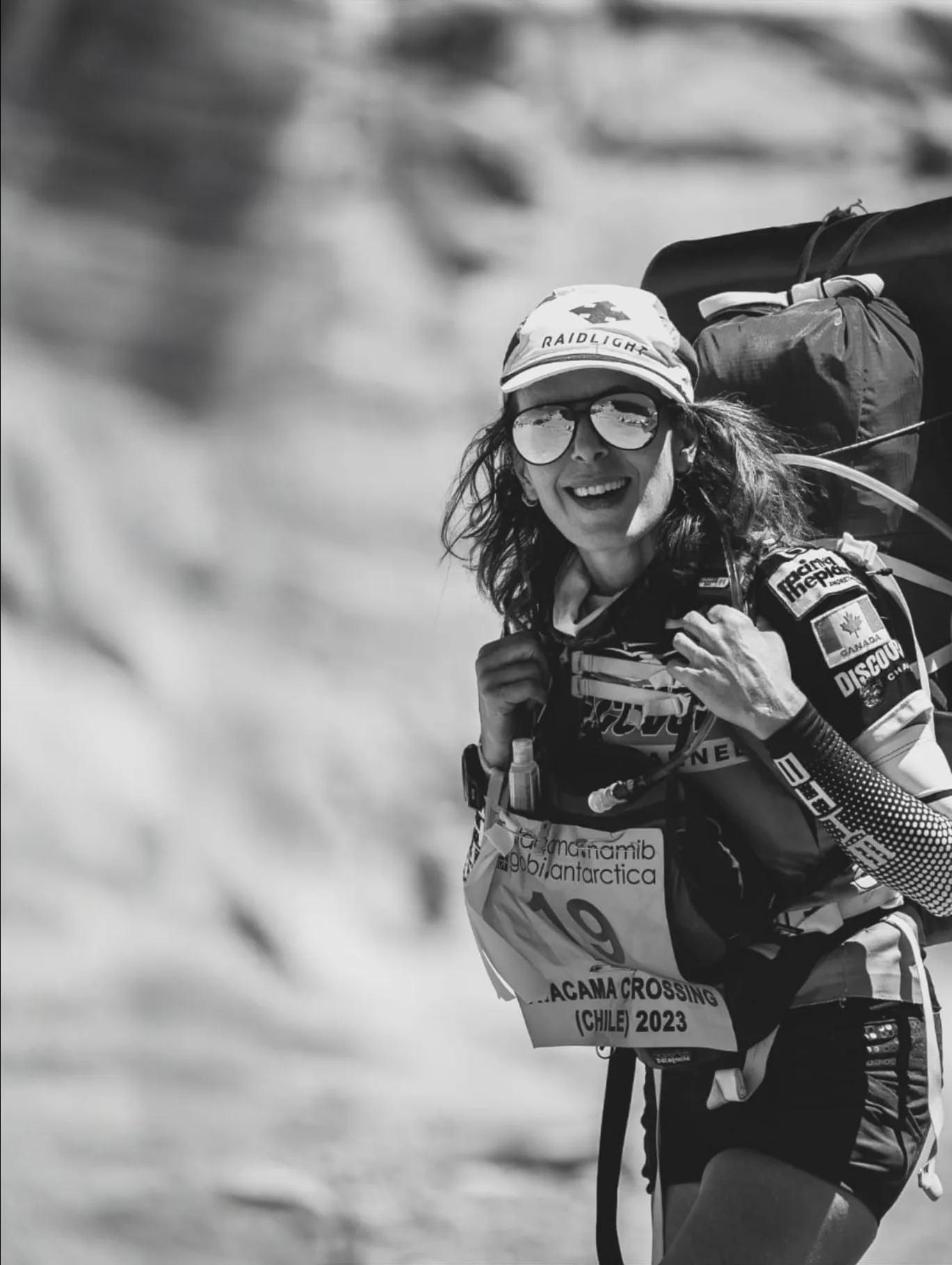
I caught COVID a few weeks before that race and had to withdraw, so I set my sights on the Atacama Crossing instead. I spent the extra time studying everything I could find about ultrarunning and putting it into practice. In 2023 I finished 2nd, strong and injury-free.
That race is why I became a coach. I coach full time now, and the athletes I work with have prepared for stage races and ultramarathons on every continent, including the Gobi March, the Atacama Crossing, Racing the Planet's race in Jordan, the Marathon des Sables and Antarctica. Most were preparing for their first stage race, with jobs, families and a fixed number of hours to train. My job is to work out what each of them needs to focus on, and when, so the time they have goes where it counts.
I coach running, strength training and nutrition together, because in a stage race each one affects the others.
What other athletes say about the coaching
From athletes I've coached for stage races and ultramarathons around the world.
“Fueling and carb intake for a multi-day stage race can be notoriously difficult to plan, but Jeremy provided clear, actionable advice that kept my energy consistent throughout… From fine-tuning my gear list to dialing in every detail of race execution, his hands-on support was invaluable.”
“I recently completed the Atacama Crossing, and I couldn’t have done it without Jeremy… This was my first ultra of this kind, and thanks to his coaching, I felt physically and mentally prepared every step of the way.”
“Beyond just simply the programming and the guidance, just having the strategy conversations, especially getting closer to the big race and getting into the technical elements of planning with gear and also nutrition on a multi-day race was absolutely 100% essential… I felt as though I was 100% prepared for this.”
“The race came and went and I was able to perform far beyond my expectations… When life happened throughout the months leading up to the race, Jeremy helped me to keep my head cool by adapting to the roadblocks so I could continue to build fitness brick by brick.”
“Jeremy is not only a fantastic coach, but a fantastic human. I had a really challenging training block with injuries, and some illnesses but he navigated it brilliantly, always thoughtful, flexible, informed and available, while making me feel supported and confident I could still achieve what I wanted to achieve.”
“He doesn’t make you feel guilty for missing a session—he adapts, finds solutions, and keeps you moving forward. He also takes real life into account: work, family, vacations—everything. That makes the training both sustainable and motivating.”
“I loved the fact that starting from the onboarding process, he paid attention to all the small things such as lifestyle, nutrition, and work environment by asking the right questions and trying to understand all the components that characterize me as an individual.”
“He’s incredibly responsive, super relatable, and genuinely authentic. He strikes this perfect balance of ease and focus, and he always meets you exactly where you are. If coaches keep showing up like this, AI’s going to be out of a job.”
“I love the training methods and Jeremy's overall outlook on running. We focus on what's important... the things that really matter to make progress.”
“Jeremy is not only a true professional but also such a great listener, always able to see the big picture and the path toward the goal!”
"With the always positive and personal feedback, he makes you feel as if you can reach any goal you set yourself. He encourages and is there for the dips as well as victories."
Joining the Gobi March 2027 group
- Apply. The form takes about 3 minutes and asks about your running, your schedule and your goals for the race.
- Talk it through. I'll reply within 2 business days to set up a 25-minute call about your race, and whether the group or 1:1 coaching fits you better.
- Get your plan. Once you join, I build your plan so it's ready for your first week.
Applying doesn't commit you to anything.
Gobi March 2027 group · 250 km self-supported and UltraLite
$150 per month
A monthly subscription through Stripe, until race day.
- Starts February 1, 2027. The last day to join is January 24, so your plan is ready before the first week. You can also start sooner, at the same rate.
- Up to 8 athletes. The group runs whatever its size.
- 60-day money-back guarantee. If for any reason you're not happy with the coaching, I'll refund 100% of what you've paid.
Questions
This will be my first stage race. Is that a problem?
No. Most of the athletes I've coached for stage races were doing their first one. Your plan starts from where you are now, and you'll be preparing alongside other people asking the same questions.
I'm doing the UltraLite. Is the group for me?
Yes. The UltraLite stages are shorter and your main gear is carried between camps, so your plan and your preparation will look different from someone running the 250 km self-supported race. Your plan is written for the race you're doing, and you'll share the same course, camps and many of the same questions with the rest of the group. It's the same group, at the same price.
Can I start before February 1?
Yes, at the group rate of $150 per month. Your individual plan, the weekly Monday review and the tutorials start as soon as you join. The group chat and monthly calls begin on February 1, when the whole group starts.
How many hours a week will I train?
It depends on where you're starting and how much time you have. Your plan is built around the hours you actually have, and it builds gradually toward race day. We'll talk about this on the call after you apply.
Do I need a gym?
Access to some weights helps, because strength training is part of how you build durability for a stage race. If you have a home setup or limited equipment, I'll write your strength sessions around what you have.
What happens if I get injured?
Message me and I'll adjust your plan. If it turns into something that needs closer monitoring, we can talk about switching to 1:1 coaching for a while.
Can I switch between the group and 1:1?
Yes, in either direction. The switch happens at the end of your current monthly billing cycle, and I'll update your subscription to the new price.
How do I pay?
Through Stripe, as a monthly subscription. You set it up once.
What if I withdraw from the race?
Then you can cancel. Your subscription ends at the end of the current billing month.
Have you run a group before?
No, this is the first one. What's new is the group chat and the monthly calls. The coaching itself works the way it does for my 1:1 athletes: a plan written for you, reviewed and updated every week. The same 60-day money-back guarantee applies.
I'm in a very different time zone. Does that matter?
Your plan and your workout comments are in TrainingPeaks, so time zones don't matter for those. For the group calls, I'll ask everyone for their preferred times and choose the one that works for the most people. Every call is recorded, so you can watch it later if you can't make it.
Do I need a TrainingPeaks account?
A free account is enough to start. I'll upgrade it to Premium while you're in the group. If you already pay for Premium, you can keep using your own.
I haven't entered the Gobi March yet. Can I still join?
Yes. You can join before your race entry is booked. Apply by January 24 so your plan is ready for the February 1 start.
Upcoming groups
Join the waitlist to hear first when the group for your race opens.
| Race | Race starts | Group |
|---|---|---|
| Gobi March, Mongolia | June 20, 2027 | Open now: apply |
| Racing the Planet Brazil | August 15, 2027 | Join the waitlist |
| Namib Race, Namibia | May 21, 2028 | Join the waitlist |
| Gobi March, Mongolia | July 30, 2028 | Join the waitlist |
| Atacama Crossing, Chile | October 1, 2028 | Join the waitlist |
Going to a race with friends or a team? I can set up a private group for you. Get in touch and we'll work out the details.
Preparing for the Gobi March 2027?
The application takes about 3 minutes. I'll reply within 2 business days to set up a 25-minute call, and you can decide after that.
Apply for the Gobi March group